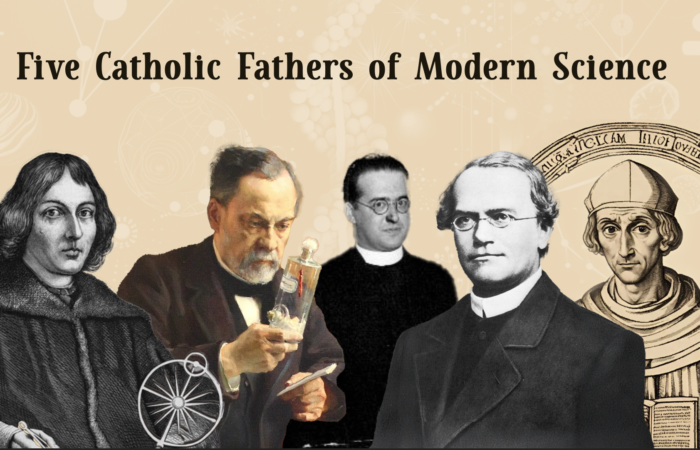
Five Catholic Fathers of Modern Science
In modern popular culture, Christians are often portrayed as ignoramuses who oppose science and reason. However, Christianity has significantly shaped science as we know it today. Christians believe that God, the Creator, is a rational and consistent being, and therefore, we can discover how the Universe works using our reason. As famous astronomer Nicolaus Copernicus stated –
“The mechanisms of the universe, wrought for us by a supremely good and orderly Creator… the system best and most orderly artist of all framed for our sake.”
In this article, you will learn about 5 Catholic fathers of modern science:
William of Ockham, the Father of Epistemology and Nominalism
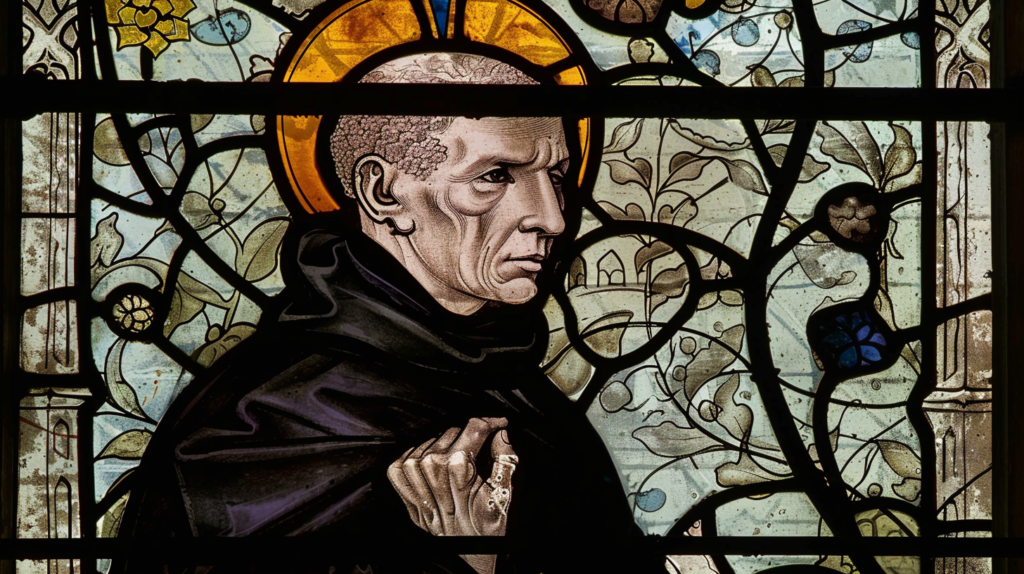
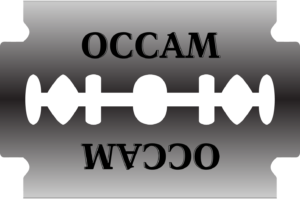
William was a 13th-century Franciscan friar who opposed the Aristotelian idea of universals, which are characteristics of things considered to be mind-independent entities. Instead, he viewed them as simple concepts, like humans, for instance. Ockham was a proponent of efficient reasoning. His famous saying, “Plurality is never to be posited without necessity,” is known today as Ockham’s Razor, meaning the simplest solution is the most viable.
Friar William was also a radical pioneer in political thought. He advocated for the separation of Church and State, passionately supported private property, and promoted what would later be called the social contract between the state and the individual.
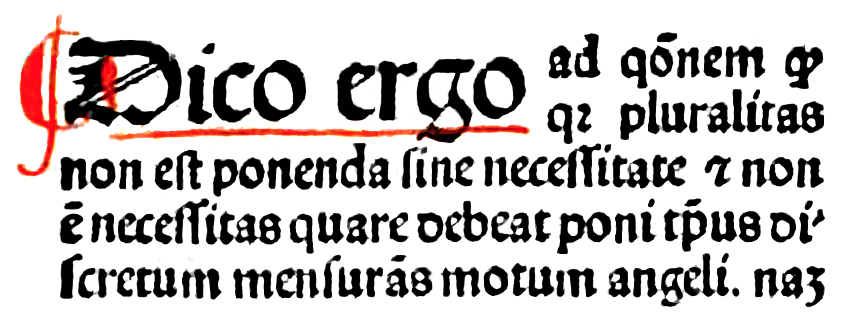
William of Ockham has influenced numerous thinkers in the fields of logic, political thought, theology, and philosophy.
“Logic is the most useful tool of all the arts. Without it, no science can be fully known.”
Nicolaus Copernicus – Father of Modern Astronomy
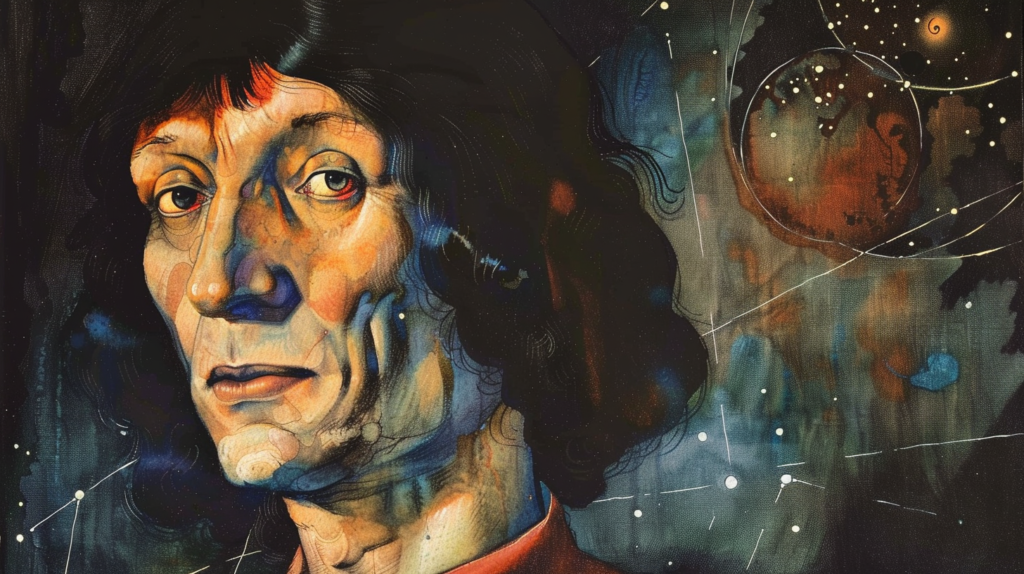
Nicolaus Copernicus was born in Toruń, Poland, in 1473. He studied mathematics and astronomy at Krakow University. He became a Catholic canon and served the bishop of Warmia for most of his life. Nicolaus traveled extensively and studied various disciplines, including canon law at the University of Bologna, medicine at the University of Padua, and Greek language and literature. He served as a political advisor, physician, and administrator of Warmia.
Despite his broad knowledge and numerous duties, he is best known for outlining the heliocentric system in his early work, “Commentariolus,” and later in his magnum opus, “On the Revolutions of the Heavenly Spheres,” which was printed shortly before his death.
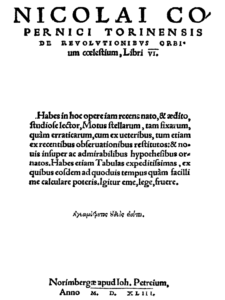
The theory was revolutionary at the time, as the Ptolemaic worldview, which placed Earth at the centre of the Universe, was commonly accepted. “On the Revolutions” was not widely noticed or discussed immediately after its publication. Only half a century later did a new generation of astronomers, like Galileo, study it, and it faced fierce criticism from some Church officials.
Nevertheless, Nicolaus Copernicus is named the Father of Modern Astronomy. His understanding of the Universe was correct and far ahead of his time.
“To know the mighty works of God; to comprehend His wisdom and majesty and power; to appreciate in degree, the wonderful working of His laws, surely all this must be a pleasing and acceptable mode of worship to the Most High, to whom ignorance cannot be more grateful than knowledge.”
Louis Pasteur – Father of Microbiology and Immunology
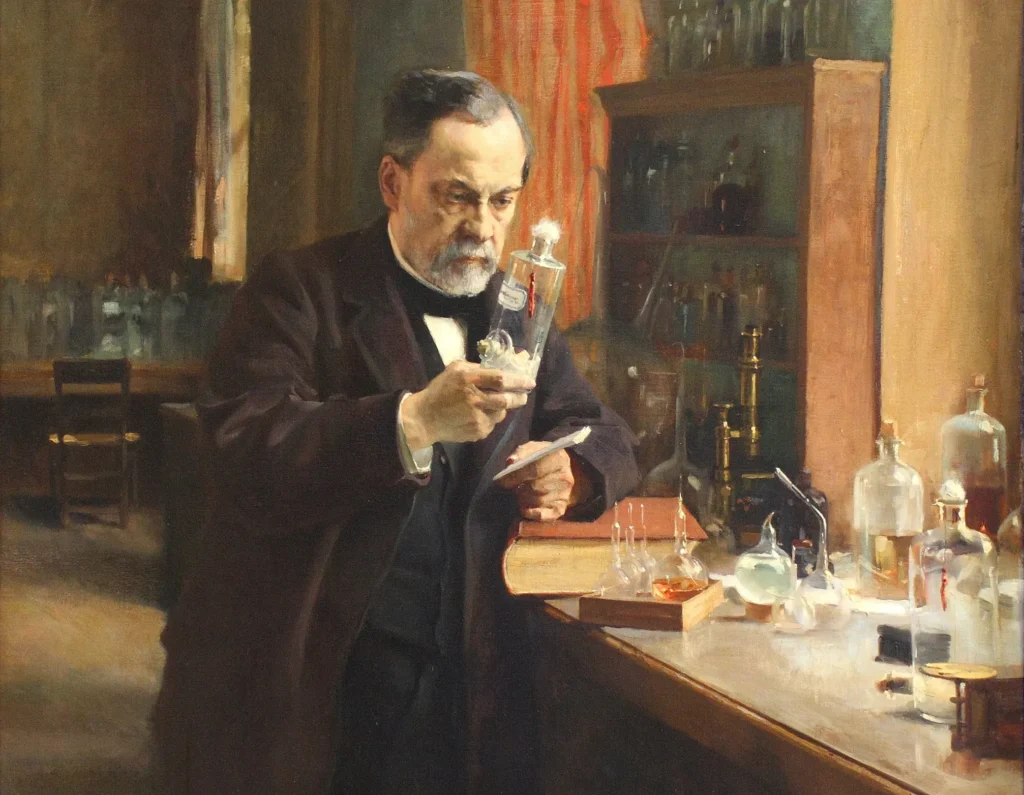
Louis Pasteur was a chemist and biologist who discovered that the spoiling of milk and wine was caused by germs floating in the air. At the time, the prevalent theory of spontaneous generation, vigorously supported by his rival Félix Pouchet, posited that life could form from random molecules. Pasteur disproved this theory with a simple experiment: he boiled liquid in a swan-neck flask. When the liquid was left undisturbed, no contamination occurred, but when the flask was tilted, allowing the liquid to contact dust in the neck, germs spread in the water.
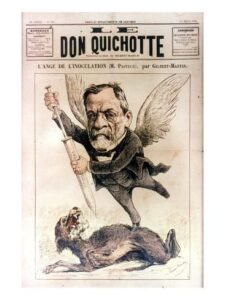 Louis Pasteur founded the widely used pasteurization method, which prevents products like milk from spoiling by heating them to kill germs and then sealing the container. He also successfully developed the anthrax and rabies vaccines, which laid the foundation for modern vaccination techniques. Additionally, his discoveries led surgeons to use antiseptics during surgeries, thereby reducing the risk of infection.
“Too little science leads away from God, while too much science leads back to Him.”
“The more I study nature, the more I stand amazed at the work of the Creator.”
Johann Mendel, known as the Father of Modern Genetics.
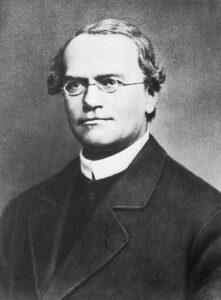
Johann Mendel was born in 1822 and grew up on a farm in Silesia, then part of the Austrian Empire and now in the Czech Republic. He studied philosophy and physics at the University of Olomouc. Joining the Augustinian order allowed him to pursue his academic career without financial concerns. From 1851 to 1853, he studied botany, zoology, chemistry, and physics at the University of Vienna.
At the Augustinian St. Thomas Abbey in Brno, Mendel began his famous experiments with peas. He meticulously categorized pea plants based on traits such as pea shape, flower color, and plant height. Between 1856 and 1863, Mendel cultivated and studied around 28,000 plants, predominantly peas (Pisum sativum). His studies demonstrated that when true-breeding different varieties were crossed (e.g., tall plants fertilized by short plants), the second generation exhibited specific ratios: one in four plants showed purebred recessive traits, two out of four were hybrids, and one out of four were purebred dominant. These findings led to Mendel formulating what are now known as Mendel’s Laws: for instance the
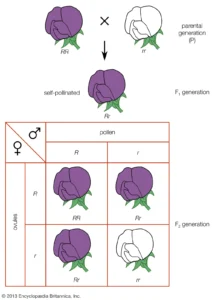
- Law of Dominance: One trait or allele (e.g., red flower color) may dominate over another in the second generation.
- Law of Segregation: Alleles segregate from each other during gamete formation, ensuring each gamete carries only one allele per gene.
- Law of Independent Assortment: Genes governing different traits segregate independently during gamete formation.
Thus, the Augustinian abbot who experimented with pea selection became known as the Father of Modern Genetics.
“Man must contribute his minimum work of toil, and God gives the growth. Truly, the seed, the talent, the grace of God is there, and man has simply to work, take the seeds to bring them to the bankers. So that we ‘may have life, and abundantly.”
Fr. George Lemaître – The Father of the Big Bang Theory
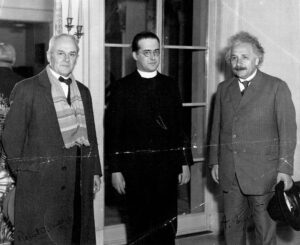
Georges Henri Joseph Édouard Lemaître was born in Belgium in 1894. He studied engineering, mathematics, and physics before being ordained as a priest in 1923. That same year, he became a research associate in astronomy at the University of Cambridge, where he collaborated with Arthur Eddington. He then spent a year at Harvard College Observatory with Harlow Shapley. In 1925, he returned to the University of Louvain and published a paper presenting a theory based on Einstein’s theory of relativity, proposing that the universe is constantly expanding. This theory later became known as the Hubble-Lemaître law, which states that galaxies are receding from Earth at speeds proportional to their distance. This led Fr. Lemaître to conclude that at some point in history, the universe was initially a single atom or “primeval atom,” as he called it. This theory became known as the Big Bang Theory and was initially met with skepticism by modern astrophysicists, including Einstein himself. Fr. Lemaître lived until 1966, when the discovery of cosmic microwave background radiation confirmed his theory.
“I was interested in truth from the point of view of salvation just as much as in truth from the point of view of scientific certainty. It appeared to me that there were two paths to truth, and I decided to follow both of them.”
We hope that after reading this article, you will find the idea that religion and science are incompatible to be absolutely absurd. The five Catholic fathers of modern science are not alone, there are many others Christian scientists who have shaped the world as we know it.